Phoebe: A Calligraphy Script for Timeless Elegance
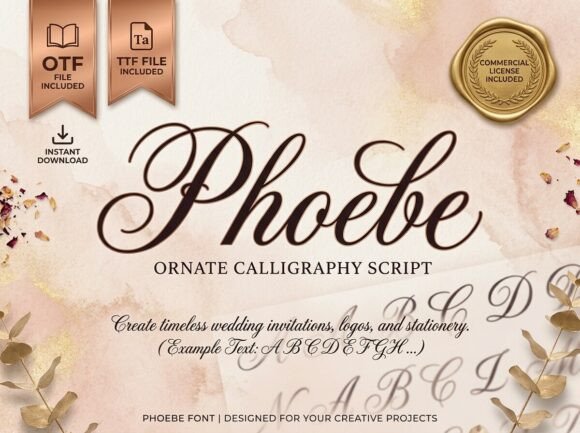
There’s a particular challenge in design when a project calls for something that feels both classic and current. You want the weight of tradition, the sense of history and craftsmanship, but with a freshness that prevents it from feeling dated. This is the space where the Phoebe calligraphy script excels. It’s not just another script font; it’s a carefully crafted tool for designers who need to bridge that gap. With its graceful, sweeping swashes and a delicate, hand-lettered touch, Phoebe offers a sophisticated balance that’s hard to find. It’s a premium font designed for moments that matter, from a couple’s wedding vows to the launch of a luxury brand.
The Visual Character: More Than Just Swashes
At first glance, Phoebe’s personality is clear. It’s ornate without being fussy, and fluid without sacrificing legibility. The strokes have a natural, ink-on-paper quality that feels authentically human, which is crucial in our digital age. This isn’t a font that looks like it was generated by a machine; it feels crafted. The ornate details in its connections and terminals give it a high-fashion, romantic aesthetic. Think of the difference between a mass-produced greeting card and one from a boutique stationer—Phoebe is the latter. Its appeal lies in its ability to convey care, quality, and a personal touch. As a creative font, it’s built for impact in headlines, logos, and feature text where its personality can truly shine. It’s less about being a workhorse body copy font and more about being the star of the show in a font pairing with a cleaner sans serif font or even a simple serif font.
Where Phoebe Truly Shines: Practical Applications
Understanding a font’s strengths is key to using it effectively. Phoebe isn’t a one-size-fits-all solution, and that’s a good thing. Its strength is in specific, high-impact applications where its elegance can be fully appreciated.
- Wedding & Event Stationery: This is its natural home. For wedding invitations, save-the-dates, menu cards, and program covers, Phoebe sets an immediate tone of sophistication. It pairs beautifully with a light, airy sans serif font for the details, creating a perfect hierarchy.
- Luxury Brand Identity: For businesses in beauty, fashion, boutique hospitality, or artisanal goods, Phoebe can form the core of a logo design. It instantly communicates premium quality and a personal, crafted ethos. It’s a fantastic commercial font for brands that want to stand apart from the cold, geometric logos of big tech.
- Editorial & Publishing: In editorial design, use Phoebe for chapter titles, pull quotes, or section headers in a magazine or high-end book. It adds a layer of artistry and breaks up the monotony of standard text, guiding the reader’s eye with style.
- Digital Presence & Social Media: While it requires careful sizing, Phoebe can elevate web design hero sections, blog post titles, and especially social media graphics. On platforms like Instagram and Pinterest, where visual appeal is paramount, a beautiful typographic header can stop the scroll. It’s a powerful display font for creating shareable quotes and promotional images.
- Packaging & Product Labels: For packaging design, particularly for products like perfumes, artisanal chocolates, or boutique candles, Phoebe adds perceived value. It tells the customer that what’s inside is special and made with attention to detail.
Making Phoebe Work: A Designer’s Practical Guide
Adding a new font like Phoebe to your design assets is exciting, but using it strategically is what separates good design from great design. Here’s how to approach it.
Evaluate the Project Fit: Before you even start, ask: Does this project call for romance, luxury, or a personal touch? If you’re designing a financial report or a tech startup’s website, Phoebe is likely the wrong choice. But for a bakery’s menu, a photographer’s watermark, or a blogger’s brand kit, it could be perfect. Its modern typography feel keeps it from looking stuffy, but its core personality is one of elegance.
Master the Font Pairing: This is critical. Phoebe demands a quiet partner. Your best bet is to pair it with a neutral, highly legible sans serif font like Montserrat, Lato, or Open Sans for body text and supporting information. This contrast allows Phoebe’s details to be appreciated without causing visual chaos. For a more classic look, a simple, clean serif font like Garamond or Times New Roman can also work, but ensure the serif doesn’t compete with Phoebe’s swashes.
Consider Readability and Hierarchy: As a handwritten font with intricate details, Phoebe is not meant for long paragraphs. Its magic is in the headline, the logo, the main invitation text. Use it large enough for its swashes to be clear, especially at smaller sizes. Always conduct a readability test. Print it out, view it on multiple screens, and see if it holds up. Use it to establish the top of your visual hierarchy, then let your paired font handle the detailed information.
Check the Styles and Licensing: A quality typeface like Phoebe often comes with more than one style. Look for additional features like stylistic alternates, ligatures, or a set of ornaments. These can give you more creative control and help avoid repetition in your letterforms. Furthermore, always verify the commercial font license. If you’re using it for a client’s logo, merchandise, or a downloadable product, you need to ensure your license covers that use. This is a non-negotiable step in professional practice.
In the end, Phoebe is more than just a set of beautiful letters. It’s a strategic asset for brand identity and creative projects that aim to connect on an emotional level. It influences brand perception by signaling sophistication and care, boosts audience engagement through its inherent beauty, and brings a level of professionalism and recognition that generic fonts simply cannot. By understanding its personality and applying it with intention, you can use Phoebe to craft designs that feel both timeless and distinctly modern.