Madayuki: The Script Font That Balances Elegance and Impact
When you're tasked with creating a design that needs to feel both personal and polished, the font choice often makes or breaks the project. A typeface can whisper sophistication or shout for attention, but finding one that does both with grace is a rare discovery. Madayuki is precisely that kind of find—a premium script font that walks the line between flowing elegance and confident presence. It’s not just another decorative typeface; it’s a versatile design asset built for creators who need their work to connect on a human level while maintaining professional standards.
Understanding the Personality Behind the Letters
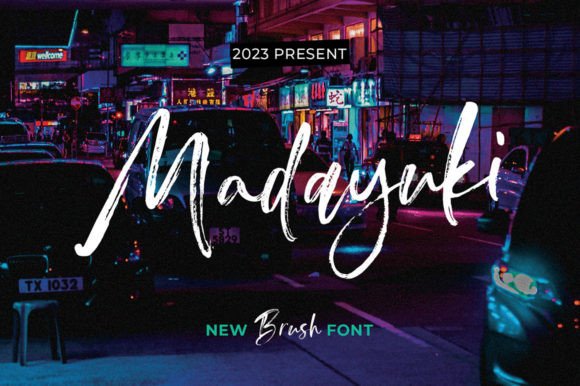
At its core, Madayuki is a script font with a distinctly modern handwritten character. The letterforms carry a natural, flowing rhythm, as if crafted with a steady brush or pen. You’ll notice subtle variations in stroke width that give it an organic, authentic feel—something that purely geometric or overly stylized fonts often lack. The connections between letters feel intentional but not rigid, allowing words to breathe while maintaining a cohesive visual flow.
What sets Madayuki apart from many other script fonts is its balance. Some handwritten typefaces lean so far into casual imperfection that they become difficult to read at smaller sizes or in longer passages. Others are so formal they lose warmth entirely. Madayuki occupies a thoughtful middle ground. The letter spacing is generous enough to preserve clarity, and the x-height is substantial enough that lowercase characters don’t disappear when scaled down. This makes it a genuinely creative font that doesn’t sacrifice function for style.
The overall aesthetic carries a sense of understated luxury. It evokes the feeling of a handwritten note from someone who takes care with their words—not overly fussy, but clearly considered. That quality makes it particularly effective for projects where trust and authenticity matter.
Where Madayuki Truly Shines
Every typeface has contexts where it performs at its best, and Madayuki is no exception. Its strengths become most apparent in projects that demand a personal touch without sacrificing readability or brand authority.
Branding and Logo Design
For logo design, Madayuki offers a compelling option for brands that want to convey approachability and elegance simultaneously. Think boutique hotels, artisan bakeries, independent florists, lifestyle coaches, or premium skincare lines. When used as the primary wordmark or as a complementary element alongside a clean sans serif font, it can anchor a brand identity that feels both refined and relatable. The key is to let it do the heavy lifting on the brand name while pairing it with something more neutral for supporting text.
Wedding and Event Stationery
Wedding invitations, save-the-dates, and event programs are natural territory for a font like this. Madayuki brings the kind of warmth and personality that formal serif fonts sometimes struggle to convey. It works beautifully for names, headings, and accent phrases on invitation suites, menus, and place cards. The flowing script style adds romantic energy without veering into overly ornate territory that can date quickly.
Packaging and Product Design
In packaging design, especially for small-batch or artisan products, the right font can communicate craft and care before a customer ever reads a single word. Madayuki performs well on labels for candles, cosmetics, gourmet foods, and handmade goods. Its handwritten quality suggests human involvement in the creation process—a powerful psychological cue for consumers who value authenticity over mass production.
Digital and Social Media
For social media graphics, blog headers, and web design accents, Madayuki adds visual interest where flat, uniform typefaces might blend into the background. It’s particularly effective for quote graphics, promotional banners, and call-to-action statements. On platforms like Instagram and Pinterest, where visual distinctiveness drives engagement, a well-chosen script font can stop a scrolling thumb. Just be mindful of sizing—what looks stunning in a mockup at 72pt may lose legibility as a 14pt caption overlay on a busy photograph.
Editorial and Publishing
In editorial design, Madayuki works best as an accent rather than a workhorse. Pull quotes, chapter titles, magazine headers, and section dividers benefit from its expressive character. Pairing it with a reliable serif font for body text creates a visual hierarchy that guides the reader’s eye naturally. It’s the kind of contrast that experienced designers use to create rhythm on a page—moments of visual energy balanced against steady, readable blocks of copy.
Practical Guidance for Working with Madayuki
Choosing a premium font is only the first step. Using it well requires some deliberate decision-making.
Evaluating Project Fit
Before committing to Madayuki for any project, ask yourself a straightforward question: does this design need to feel personal? If the answer is yes—whether it’s a wedding invitation, a personal brand, or a product label—then it’s worth exploring. If the project demands clinical precision or maximum readability at small sizes (think legal documents, technical manuals, or dense data tables), a display font like this isn’t the right tool. Matching the font’s personality to the project’s purpose is the most important decision you’ll make.
Font Pairing Strategies
Madayuki pairs well with a range of complementary typefaces. For a clean, contemporary look, try combining it with a geometric sans serif font like Montserrat or Poppins. The contrast between the organic script and the structured sans serif creates visual tension that feels dynamic without being chaotic. For a more traditional or editorial feel, a classic serif font like Lora or Playfair Display can ground the design with a sense of timelessness. The general principle is simple: let Madayuki carry the expressive, high-impact moments while the supporting font handles the practical, readable work.
Readability Considerations
One of the most common mistakes with script fonts is using them for body text or long-form copy. Madayuki is best reserved for headlines, short phrases, names, and accent text. At larger sizes, its character and flow are assets. At smaller sizes, the connections between letters can begin to compromise clarity. Always test your designs at the actual size they’ll be viewed—on screen and in print—before finalizing.
Licensing and Usage
As a commercial font, Madayuki comes with licensing terms that cover a range of uses. Whether you’re creating designs for your own business, producing client work, or selling physical products like mugs, T-shirts, or printed stationery, review the license details to ensure your intended use is covered. Most premium font licenses are straightforward, but it’s worth confirming before a project goes to print or production.
Why Thoughtful Font Selection Matters
In a landscape saturated with free fonts and quick design templates, taking the time to choose a typeface that genuinely fits your project is a competitive advantage. Madayuki isn’t trying to be everything—it’s a specialized tool designed for specific creative needs. When used in the right context, it elevates a design from competent to memorable. It helps brands feel more human, invitations feel more personal, and marketing materials feel more intentional.
The best modern typography decisions aren’t about following trends. They’re about understanding what a font communicates and matching that communication to your audience’s expectations. Madayuki communicates warmth, craftsmanship, and quiet confidence. If that aligns with your project’s goals, it’s a typeface worth building around.
Explore the full character set, test it in your actual design files, and see how it interacts with your other design assets. A font that looks beautiful in isolation may surprise you in context—and that’s exactly the kind of discovery that leads to stronger, more effective creative work.